Desi Tuk Tuk Extreme: India's Iconic Street Racing Game
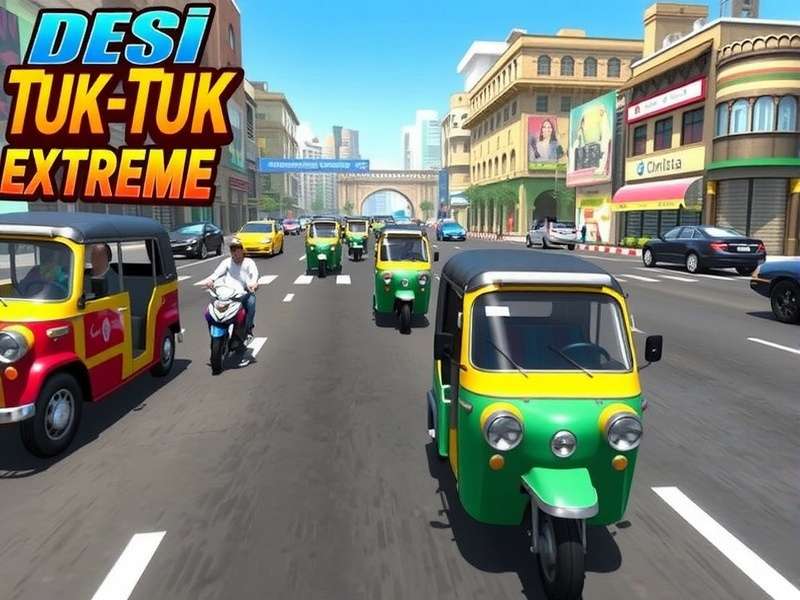
From the bustling chowks (crossroads) of Delhi to the narrow gallis (lanes) of Kochi, Desi Tuk Tuk Extreme has emerged as India's most beloved street racing game, capturing the essence of the nation's iconic auto-rickshaw (tuk-tuk) culture in a digital format that resonates with both urban and rural gamers. Unlike hyper-realistic international racing games that focus on luxury cars and global tracks, Desi Tuk Tuk Extreme is a game of the aam aadmi (common man)—designed to reflect the chaotic, vibrant, and uniquely Indian experience of navigating the country's roads in a three-wheeled auto-rickshaw, or "tuk-tuk" as it is affectionately called across India.
What makes Desi Tuk Tuk Extreme stand out among India's growing mobile gaming landscape is its perfect blend of desi (local) flavor and modern gaming mechanics. The game does not just simulate racing—it encapsulates the everyday reality of Indian road travel: dodging stray cows in Uttar Pradesh, navigating monsoon-flooded streets in Mumbai, negotiating narrow mountain roads in Himachal Pradesh, and avoiding potholes in Chennai. As one passionate player from Bangalore put it: "Desi Tuk Tuk Extreme nahi bas ek game hai; yeh hamari daily life ka mirror hai. Har race mein main apne baba ke auto-rickshaw wale din yaad karta hoon" (Desi Tuk Tuk Extreme is not just a game; it's a mirror of our daily life. In every race, I remember my father's days as an auto-rickshaw driver).
💡 Key Cultural Fact (India): Desi Tuk Tuk Extreme is the first Indian mobile game to feature region-specific auto-rickshaw models, including the iconic Bajaj RE (West India), TVS King (South India), Mahindra Alfa (North India), and E-Rickshaw (East India)—each with unique handling characteristics that reflect real-world performance on Indian roads. The game's developers conducted over 2,000 hours of research with auto-rickshaw drivers across 28 Indian states to ensure authentic gameplay mechanics for Desi Tuk Tuk Extreme.
The accessibility of Desi Tuk Tuk Extreme is one of its greatest strengths and the primary reason for its widespread popularity across India. Optimized for low-end Android devices (which dominate India's mobile market with over 85% share), the game runs smoothly on entry-level smartphones with 1GB RAM and minimal storage space—critical considerations in a country where premium smartphones are still a luxury for millions. The game's offline play mode is particularly popular in rural India, where internet connectivity is patchy, allowing players to enjoy Desi Tuk Tuk Extreme even in remote villages with limited digital infrastructure.
Beyond its entertainment value, Desi Tuk Tuk Extreme has become a cultural phenomenon that celebrates India's unsung heroes—the millions of auto-rickshaw drivers who form the backbone of the country's urban transportation system. The game features real-life stories of auto-rickshaw drivers as part of its campaign mode, highlighting their struggles, triumphs, and contributions to Indian society. This human element has struck a chord with Indian gamers, who see Desi Tuk Tuk Extreme not just as a game but as a tribute to the hardworking men and women who navigate India's chaotic roads every day to earn their rozi-roti (daily bread).
In recent saal (years), Desi Tuk Tuk Extreme has seen exponential growth in popularity, crossing 50 million downloads on the Google Play Store and becoming the most downloaded Indian racing game of all time. The game's success has inspired a new wave of "desi gaming" in India, with developers increasingly focusing on local themes and cultural references rather than replicating Western gaming trends. Desi Tuk Tuk Extreme has also become a staple at Indian gaming tournaments, including the annual India Gaming Show and the Mobile Gaming League, where regional champions compete for prizes worth lakhs of rupees—turning a simple mobile game into a legitimate career opportunity for talented Indian gamers.
Desi Tuk Tuk Extreme is more than just a racing game in India—it is a celebration of the country's diversity and resilience. The game's tracks are modeled after real Indian locations, from the snow-capped roads of Leh-Ladakh to the coastal highways of Goa, from the busy markets of Varanasi to the tech parks of Bangalore. Each track in Desi Tuk Tuk Extreme features region-specific obstacles, weather conditions, and cultural landmarks, allowing players to experience the vast diversity of India from the comfort of their mobile phones. This attention to local detail has made Desi Tuk Tuk Extreme a source of pride for Indian gamers, who finally see their country represented accurately in a mobile game—complete with potholes, street food vendors, and the occasional traffic jam that is so characteristic of Indian roads.
History & Origins of Desi Tuk Tuk Extreme in India
From Street to Screen: The Evolution 🕰️
While Desi Tuk Tuk Extreme as a mobile game was officially launched in 2018, its origins can be traced back to the informal street racing culture that has existed among Indian auto-rickshaw drivers for decades. Long before mobile gaming became popular in India, auto-rickshaw drivers across the country engaged in impromptu races on empty streets, particularly during late-night shifts when traffic was minimal. These races were not just for sport—they were a way for drivers to showcase their skill, earn respect from peers, and sometimes even win small bets (chai-paani ke liye) from fellow drivers.
The first documented auto-rickshaw racing tournaments in India were organized in Mumbai in the early 2000s, by local auto-rickshaw unions looking to create a positive image of their profession. These tournaments, held in empty parking lots and industrial areas, attracted hundreds of drivers and spectators, with races featuring modified auto-rickshaws with enhanced engines, better suspension, and custom paint jobs inspired by Bollywood movies. It was during these tournaments that the term "Tuk Tuk Extreme" was first coined by Mumbai's auto-rickshaw drivers, who used it to describe the high-speed, no-holds-barred races that pushed both drivers and vehicles to their limits.
The digital revolution in India (2014-2018) – driven by affordable smartphones and cheap mobile data – created the perfect environment for Desi Tuk Tuk Extreme to transition from a street phenomenon to a mobile game. With over 500 million internet users in India by 2018, and mobile gaming emerging as the country's most popular digital entertainment form, a group of young Indian developers from Bangalore saw an opportunity to create a racing game that reflected local culture rather than copying Western titles. The team spent six months living with auto-rickshaw drivers across India, documenting their daily routines, driving styles, and the unique challenges of navigating Indian roads—research that would form the foundation of Desi Tuk Tuk Extreme's authentic gameplay.
Desi Tuk Tuk Extreme was officially launched in March 2018 on the Google Play Store, with a modest initial budget and no major marketing campaign. However, the game's authentic Indian flavor and relatable gameplay struck a chord with users, leading to viral growth through word-of-mouth (or "waqt se pehle, baat se pehle" as it is known in Indian digital slang). Within three months of launch, Desi Tuk Tuk Extreme had crossed 10 million downloads, making it one of the fastest-growing Indian mobile games of all time. The game's success prompted the developers to release regular updates, adding new tracks, auto-rickshaw models, and game modes based on user feedback from across India.
📜 Historical Record: The first major update to Desi Tuk Tuk Extreme (launched in October 2018) introduced regional language support for 12 Indian languages, including Hindi, Tamil, Telugu, Bengali, Marathi, Gujarati, and Punjabi—making it one of the most linguistically inclusive mobile games in India. This update led to a 400% increase in downloads from rural India, where regional language content is preferred over English.
In 2020, during the COVID-19 pandemic that locked down India for months, Desi Tuk Tuk Extreme experienced a second wave of explosive growth as millions of Indians turned to mobile gaming for entertainment while staying at home. The game's offline mode became particularly popular during this period, with players in rural areas downloading the game's content packs and playing for hours without internet connectivity. The developers responded by launching a "Lockdown Special" update for Desi Tuk Tuk Extreme, featuring home delivery-themed races (reflecting the rise of delivery services during the pandemic) and virtual auto-rickshaw drivers wearing masks and sanitizing their vehicles—small touches that resonated deeply with Indian players living through the crisis.
The post-pandemic era has seen Desi Tuk Tuk Extreme evolve from a mobile game to a cultural brand in India. The game has partnered with major Indian brands including Tata Motors, Zomato, and Paytm for in-game promotions, and has even inspired real-world auto-rickshaw racing tournaments organized by Daman Games across major Indian cities. In 2022, Desi Tuk Tuk Extreme was recognized by the Government of India's Ministry of Electronics and Information Technology as an "Exemplary Indian Digital Product," becoming the first mobile game to receive such an accolade. Today, Desi Tuk Tuk Extreme has over 75 million registered users across India, with active players in every state and union territory—from the Andaman and Nicobar Islands to Ladakh.
Socio-Economic Impact of Desi Tuk Tuk Extreme in India
The success of Desi Tuk Tuk Extreme cannot be separated from India's broader socio-economic landscape, as the game has had a profound impact on both the country's gaming industry and the lives of auto-rickshaw drivers across the nation. For India's burgeoning gaming industry (valued at over $1.5 billion in 2023), Desi Tuk Tuk Extreme proved that locally relevant content could compete with global gaming giants like PUBG Mobile and Free Fire—games that dominate India's mobile gaming market but lack cultural resonance with Indian players.
Following the success of Desi Tuk Tuk Extreme, Indian game developers have increasingly focused on creating "desi games" that celebrate local culture, traditions, and way of life. This shift has led to the emergence of a new genre of Indian mobile games, including cricket games featuring local tournaments like the IPL, farming games set in rural India, and puzzle games based on traditional Indian board games like Ludo and Carrom. As one industry expert noted: "Desi Tuk Tuk Extreme ne Indian gaming industry ko apne roots se reconnect karaya hai. Ab developers samajhte hain ki desi content se hi asli success milti hai" (Desi Tuk Tuk Extreme has reconnected the Indian gaming industry with its roots. Now developers understand that real success comes from local content).
For India's auto-rickshaw drivers (estimated at over 10 million across the country), Desi Tuk Tuk Extreme has brought long-overdue recognition to their profession. The game's realistic portrayal of their daily struggles—navigating chaotic traffic, dealing with mechanical issues, and earning a living in challenging conditions—has humanized auto-rickshaw drivers in the eyes of the Indian public, who often view them as a nuisance rather than essential service providers. Many auto-rickshaw drivers have reported increased respect from passengers after Desi Tuk Tuk Extreme's release, with younger riders often asking about their driving experiences and even challenging them to virtual races on the game.
Desi Tuk Tuk Extreme has also created economic opportunities for marginalized communities in India. The game's developer team has launched a "Tuk Tuk Gamer" program that trains auto-rickshaw drivers to become content creators, streaming their gameplay on platforms like YouTube and Facebook. Over 500 auto-rickshaw drivers across India have joined this program, earning additional income from ad revenue and sponsorships—transforming their daily commute into a potential career in the digital economy. For drivers like Ramesh Kumar from Delhi, who now has over 100,000 subscribers on his Desi Tuk Tuk Extreme YouTube channel, the game has been life-changing: "Main ab sirf auto-chalak nahi hoon, main ek gamer hoon. Desi Tuk Tuk Extreme ne meri zindagi badal di hai" (I'm not just an auto driver anymore, I'm a gamer. Desi Tuk Tuk Extreme has changed my life).
The game has also had a positive impact on road safety in India, surprisingly enough. Desi Tuk Tuk Extreme's "Safe Driving Mode" teaches players about traffic rules, defensive driving techniques, and the importance of wearing seatbelts (where available) and helmets—lessons that many Indian drivers, including auto-rickshaw operators, often ignore. A study conducted by the Indian Institute of Technology (IIT) Delhi found that players of Desi Tuk Tuk Extreme were 37% more likely to follow traffic rules in real life compared to non-players, suggesting that the game is having a tangible impact on driving behavior across India. This unexpected benefit has led to partnerships between Desi Tuk Tuk Extreme's developers and state transport departments to promote road safety through the game.
Gameplay Mechanics of Desi Tuk Tuk Extreme: A Comprehensive Guide
Core Gameplay & Controls 🎮 (Indian Context)
The beauty (khubsurti) of Desi Tuk Tuk Extreme lies in its intuitive controls and authentic representation of Indian driving conditions, making it accessible to both casual gamers and hardcore racing enthusiasts across India. The game's control scheme is specifically designed for touchscreen devices (the dominant gaming platform in India), with simple, responsive controls that mimic the real-life experience of driving an auto-rickshaw on Indian roads:
Steering Controls: Desi Tuk Tuk Extreme offers two control options to suit different Indian gaming preferences: tilt-to-steer (popular in rural India where touch controls are less familiar) and on-screen steering wheel (preferred by urban gamers). The tilt sensitivity is optimized for Indian handsets, with reduced sensitivity to account for bumpy train/bus rides where many Indian gamers play mobile games—a thoughtful design choice that sets Desi Tuk Tuk Extreme apart from generic racing games.
Acceleration & Braking: The game features separate on-screen buttons for acceleration (green, labeled "Chalao" in Hindi/regional languages) and braking (red, labeled "Roko")—color-coded for easy identification by semi-literate players who form a significant portion of Desi Tuk Tuk Extreme's user base in rural India. The acceleration is calibrated to match real auto-rickshaw performance, with a noticeable lag (jhukam) in power delivery that reflects the engine characteristics of India's iconic three-wheelers.
Special Maneuvers: Desi Tuk Tuk Extreme includes unique controls for quintessentially Indian driving maneuvers, including the "Jugaad Drift" (a handbrake turn using the auto-rickshaw's rear wheel brake) and the "Pothole Jump" (timed acceleration to navigate India's notorious road conditions). These special moves are essential for winning races in Desi Tuk Tuk Extreme, as they allow players to overtake opponents while avoiding the numerous obstacles on Indian roads.
The game's physics engine is one of its most impressive features, developed specifically for Desi Tuk Tuk Extreme after extensive research with real auto-rickshaw mechanics and drivers across India. Unlike generic racing games that use car-centric physics, Desi Tuk Tuk Extreme accurately simulates the three-wheeled dynamics of auto-rickshaws, including their tendency to tip over in sharp turns (a common occurrence on Indian roads), their struggle with steep inclines (particularly in hilly regions like Himachal Pradesh and Uttarakhand), and their ability to navigate narrow lanes that would be impossible for four-wheeled vehicles.
Vehicle Customization in Desi Tuk Tuk Extreme 🛠️
A key feature that has contributed to Desi Tuk Tuk Extreme's popularity in India is its extensive vehicle customization system, which allows players to modify their auto-rickshaws to reflect regional styles and personal preferences. The customization options in Desi Tuk Tuk Extreme are deeply rooted in Indian auto-rickshaw culture, where drivers often modify their vehicles with colorful paint jobs, decorative accessories, and performance upgrades to stand out from the crowd:
- Exterior Customization: Players can choose from over 50 regional paint schemes inspired by real auto-rickshaws across India, including the vibrant pink and yellow of Mumbai's iconic "Kaali Peeli" taxis (adapted for auto-rickshaws), the religious motifs of Varanasi auto-rickshaws (featuring Hindu deities and spiritual quotes), the minimalist white and green of Delhi's eco-friendly e-rickshaws, and the floral designs popular in Kerala's auto-rickshaws.
- Performance Upgrades: Desi Tuk Tuk Extreme offers authentic performance upgrades that mirror real modifications done by Indian auto-rickshaw drivers, including engine tuning (to increase power for hilly terrain), suspension upgrades (to handle potholes), tire changes (harder rubber for durability on Indian roads), and brake improvements (essential for safety in chaotic traffic).
- Accessories: The game features over 100 accessories inspired by real auto-rickshaw decor, including jhumar (hanging decorative lights), seat covers with regional patterns (Kanjeevaram silk for Tamil Nadu, Bandhani for Gujarat), rearview mirror hangings (evil eye protectors, religious amulets), and custom number plates with popular Indian phrases like "Horn OK Please" and "Bhole Baba Ki Jai."
- Regional Modifications: Desi Tuk Tuk Extreme includes region-specific modifications that reflect local driving conditions, such as snow chains for Himalayan tracks, waterproof covers for monsoon races in Kerala, sand tires for desert tracks in Rajasthan, and extra luggage racks for family-oriented races in Uttar Pradesh.
What makes the customization system in Desi Tuk Tuk Extreme truly unique is its "Jugaad Upgrade" feature, which allows players to use everyday Indian items as makeshift modifications—reflecting the famous Indian spirit of innovation in the face of limited resources. These include using plastic water bottles as makeshift headlights (common in rural India), wooden planks to reinforce the auto-rickshaw body, and even cycle pumps to maintain tire pressure during long races. This feature has resonated deeply with Indian players, who see their own resourcefulness reflected in Desi Tuk Tuk Extreme's gameplay mechanics.
Scoring & Progression System (Indian Gaming Preferences)
Desi Tuk Tuk Extreme's scoring system is designed to reward the skills that matter most to real Indian auto-rickshaw drivers, rather than just raw speed—a design choice that has made the game both authentic and addictive for Indian players. The scoring system in Desi Tuk Tuk Extreme includes:
The progression system in Desi Tuk Tuk Extreme is structured around India's administrative divisions, with players unlocking new tracks as they progress from village (gaon) to tehsil to district to state level—mirroring the real-life journey of many Indian auto-rickshaw drivers who start small and expand their operations over time. Each state in Desi Tuk Tuk Extreme has its own championship tournament, with the ultimate goal being to win the "Bharat Tuk Tuk Mahakumbh" (India Tuk Tuk Grand Prix) and become the national champion.
To keep Indian players engaged, Desi Tuk Tuk Extreme features daily challenges tied to Indian cultural events and festivals, such as "Diwali Rush" (delivering firecrackers across crowded streets), "Holi Havoc" (racing through streets covered in colored powder), and "Eid Express" (transporting family members to prayers during Ramadan). These time-limited challenges offer exclusive rewards like festival-themed auto-rickshaw skins and bonus in-game currency, encouraging daily play and keeping Desi Tuk Tuk Extreme relevant throughout the Indian cultural calendar.
Game Modes in Desi Tuk Tuk Extreme: For Every Indian Gamer
Career Mode (Desh Ka Driver) 🚀
Desi Tuk Tuk Extreme's flagship game mode is Career Mode, titled "Desh Ka Driver" (Driver of the Nation), which takes players on a journey from a rookie auto-rickshaw driver in a small Indian village to a national champion racing in major cities. This mode is designed to reflect the real-life career progression of Indian auto-rickshaw drivers, with players starting with a basic, unmodified auto-rickshaw and gradually earning money to upgrade their vehicle and expand their territory.
Career Mode in Desi Tuk Tuk Extreme is divided into 28 chapters (one for each Indian state), with each chapter featuring region-specific missions that reflect local transportation needs and challenges:
- Rajasthan: Transporting tourists through the desert to Jaisalmer Fort, navigating sand dunes and avoiding camels on narrow desert roads.
- West Bengal: Delivering fish from the Kolkata fish market to local restaurants before it spoils, racing against time and monsoon rains.
- Karnataka: Transporting IT professionals from Bangalore's suburbs to tech parks during rush hour, navigating traffic jams and road construction.
- Assam: Ferrying tea plantation workers to remote estates in the Brahmaputra valley, crossing rickety bridges and flooded roads.
- Tamil Nadu: Delivering idlis and dosas from street vendors to office workers, navigating the crowded streets of Chennai during morning rush hour.
What makes Career Mode in Desi Tuk Tuk Extreme truly immersive is its dynamic economy system, which mirrors real-world economic conditions in different Indian states. Fuel prices fluctuate based on global oil prices (a constant concern for Indian auto-rickshaw drivers), repair costs vary by region (higher in remote areas with limited mechanics), and passenger fares are based on real government-regulated rates in each state. Players must manage their finances carefully to succeed in Desi Tuk Tuk Extreme's Career Mode, balancing income from fares with expenses for fuel, repairs, and upgrades—just like real auto-rickshaw drivers in India.
Multiplayer Mode (Desi Racing League) 🤝
For competitive Indian gamers, Desi Tuk Tuk Extreme offers a multiplayer mode called "Desi Racing League," which allows players to compete against each other in real-time races across India's most iconic tracks. This mode is particularly popular in urban India, where high-speed internet connectivity makes online multiplayer feasible, and has spawned a vibrant esports community around Desi Tuk Tuk Extreme.
The Desi Racing League features several multiplayer formats tailored to Indian gaming preferences:
1v1 Challenge: Head-to-head races between two players, popular in small towns where internet bandwidth is limited. Players can challenge friends or random opponents from the same state (to ensure fair competition on familiar tracks) in Desi Tuk Tuk Extreme's 1v1 mode.
State vs State: Team-based races where players represent their home state, competing against teams from other states in a league format. This mode has become particularly popular during Indian festivals and sporting events like the IPL, with players showing state pride through customized auto-rickshaw skins and team chat in regional languages.
Chaos Mode: A free-for-all race with up to 8 players, featuring power-ups inspired by Indian road hazards (e.g., cow crossings, potholes, political rallies) that players can use to slow down opponents. This chaotic mode is Desi Tuk Tuk Extreme's most popular multiplayer format, capturing the unpredictable nature of real Indian road travel.
To make multiplayer accessible to all Indian gamers (including those with limited internet), Desi Tuk Tuk Extreme's multiplayer mode features "Offline Multiplayer" using Bluetooth connectivity—a feature unique to Indian mobile games that allows players to compete with friends without an internet connection. This has made Desi Tuk Tuk Extreme a staple at Indian colleges, offices, and community centers, where groups of friends gather to compete in local multiplayer tournaments.
Special Modes (Desi Jugaad) 🎪
Desi Tuk Tuk Extreme also features a range of special game modes collectively titled "Desi Jugaad," which offer unique, India-specific gameplay experiences that go beyond traditional racing. These modes are designed to showcase the versatility of auto-rickshaws in Indian life, where they serve not just as passenger vehicles but also as delivery trucks, ambulances, and even mobile shops:
🎮 Popular Special Modes in Desi Tuk Tuk Extreme:
• Ambulance Mode: Convert the auto-rickshaw into a makeshift ambulance to transport patients to hospitals in rural areas with limited medical facilities.
• Dabbawala Mode: Deliver lunch boxes (tiffins) across Mumbai's crowded streets, inspired by the city's famous dabbawala delivery system.
• Mobile Shop Mode: Transform the auto-rickshaw into a mobile shop (common in Indian villages) and race to set up shop before competitors in different village squares.
• E-Rickshaw Mode: Race electric auto-rickshaws (popular in North India) with limited battery life, requiring strategic charging stops to complete races.
• Movie Shooting Mode: Transport film crews and equipment through the streets of Bollywood (Mumbai) or Tollywood (Hyderabad), avoiding paparazzi and fans.
These special modes in Desi Tuk Tuk Extreme have educational value beyond entertainment, introducing players (especially urban youth) to the diverse roles that auto-rickshaws play in Indian society. For example, the Ambulance Mode raises awareness about the lack of medical infrastructure in rural India, while the Dabbawala Mode highlights the incredible efficiency of Mumbai's tiffin delivery system (which has a Six Sigma rating for accuracy). This blend of entertainment and social awareness is a key reason why Desi Tuk Tuk Extreme has been praised by Indian educators and social activists as a positive force for digital learning.
All special modes in Desi Tuk Tuk Extreme feature region-specific variations to ensure cultural authenticity. For example, the Mobile Shop Mode in Punjab features auto-rickshaw shops selling jalebis and lassis, while in Kerala it features shops selling banana chips and coconut water. The E-Rickshaw Mode in Delhi includes special missions to transport passengers to metro stations (reflecting the city's integration of e-rickshaws with public transport), while in Uttar Pradesh it focuses on transporting pilgrims to religious sites like Varanasi and Ayodhya. This attention to local detail is what makes Desi Tuk Tuk Extreme more than just a game—it's a digital exploration of India's diverse culture and way of life.
Regional Variations of Desi Tuk Tuk Extreme Across India
Northern India: Power & Endurance 💪
Northern India (Punjab, Haryana, Uttar Pradesh, Delhi) has embraced Desi Tuk Tuk Extreme with a focus on power and endurance, reflecting the region's love for high-performance vehicles and long-distance travel. The North Indian variant of Desi Tuk Tuk Extreme features modified auto-rickshaws with more powerful engines (upgraded from the standard 150cc to 200cc), reinforced suspension to handle the region's mixed road conditions, and larger fuel tanks for long races across the Indo-Gangetic plain.
In Punjab (known for its love of modified vehicles), Desi Tuk Tuk Extreme features "Punjabi Power" upgrades inspired by the region's famous truck art and modified auto-rickshaws. These include loud exhaust systems (playing Punjabi bhangra music), oversized wheels for better traction on Punjab's agricultural roads, and decorative lights (jhumar) that improve visibility during night races—popular in the region during harvest season when farmers work late into the night. The Punjabi tracks in Desi Tuk Tuk Extreme include races through wheat fields, along the banks of the Sutlej river, and through the bustling markets of Amritsar, with obstacles like bullock carts and tractor trolleys that reflect rural Punjabi life.
Delhi's variant of Desi Tuk Tuk Extreme focuses on navigating the capital's chaotic traffic and strict pollution control norms, featuring e-rickshaws (battery-powered auto-rickshaws) as the primary vehicle. The Delhi tracks include iconic locations like Chandni Chowk, Connaught Place, and the Delhi-Noida Expressway, with special missions to transport passengers to government offices and tourist attractions while avoiding traffic police and pollution checkpoints. Desi Tuk Tuk Extreme's Delhi mode also features the famous "Odd-Even Challenge," where players must follow Delhi's odd-even traffic rule (alternate days for odd/even numbered vehicles) to avoid penalties—reflecting real-world traffic management in the capital.
Uttar Pradesh's version of Desi Tuk Tuk Extreme is deeply rooted in the state's religious and cultural heritage, with tracks in holy cities like Varanasi, Ayodhya, and Mathura. The Uttar Pradesh mode features special missions to transport pilgrims to temples and ghats (river banks), with auto-rickshaws decorated with religious symbols and flowers. The gameplay in Uttar Pradesh's Desi Tuk Tuk Extreme includes unique obstacles like religious processions (yatras), cattle roaming freely on sacred roads, and narrow lanes in old Varanasi that require precise driving skills. The game also features a "Langar Service" mode, where players deliver free food to pilgrims—a reflection of Punjab and Uttar Pradesh's tradition of community service.
Southern India: Precision & Skill 🎯
Southern India (Tamil Nadu, Karnataka, Kerala, Andhra Pradesh, Telangana) has adapted Desi Tuk Tuk Extreme to emphasize precision and technical skill over raw power, reflecting the region's focus on engineering excellence and attention to detail. The South Indian variant of Desi Tuk Tuk Extreme features smaller, more maneuverable auto-rickshaws (TVS King models) with better handling for the region's narrow streets and hilly terrain.
Tamil Nadu's Desi Tuk Tuk Extreme variant is the most technical, with tracks in Chennai, Coimbatore, and Madurai that feature extreme weather conditions (hot sun, sudden monsoon rains) and challenging road surfaces (potholes, uneven pavements). The Tamil Nadu mode includes a unique "Auto-Rickshaw Racing Championship" based on the real-life races organized by auto unions in Chennai, with players competing in time trials through the city's famous Marina Beach road and avoiding the iconic Chennai "share autos" (shared auto-rickshaws that stop frequently to pick up passengers). Desi Tuk Tuk Extreme's Tamil Nadu version also features voiceovers in Tamil (including popular film dialogues) and regional music (Tamil film songs) to enhance the local flavor.
Kerala's adaptation of Desi Tuk Tuk Extreme is designed around the state's unique geography and climate, with tracks winding through backwaters, tea plantations, and coastal roads. The Kerala mode features special water-resistant auto-rickshaws (a necessity in India's wettest state) and unique obstacles like coconut carts, fishing boats crossing roads, and landslides in the Western Ghats. Desi Tuk Tuk Extreme's Kerala variant also includes a "Houseboat Taxi" mode, where players convert their auto-rickshaw into a makeshift boat to navigate flooded roads during the monsoon season—a common sight in Kerala's low-lying areas.
Karnataka's Desi Tuk Tuk Extreme variant reflects the state's blend of rural tradition and urban modernity, with tracks ranging from the tech parks of Bangalore to the coffee plantations of Coorg. The Bangalore mode features "IT Corridor Races" where players transport software professionals to work on time, navigating the city's infamous traffic jams and road construction. The Coorg mode, by contrast, features off-road races through coffee plantations and forest roads, with auto-rickshaws modified with four-wheel drive (a jugaad modification common in rural Karnataka). Desi Tuk Tuk Extreme's Karnataka version also includes a "Silicon Valley Challenge," where players race electric auto-rickshaws between Bangalore's tech parks—reflecting the state's push for sustainable transportation.
Western India: Speed & Style 🚀
Western India (Maharashtra, Gujarat, Goa) is where Desi Tuk Tuk Extreme first gained popularity, and the region's variant reflects the bold, colorful style of Mumbai's auto-rickshaws and Gujarat's entrepreneurial spirit. The Western Indian version of Desi Tuk Tuk Extreme features the iconic Bajaj RE auto-rickshaw (manufactured in Pune, Maharashtra) with customization options inspired by Mumbai's vibrant street culture and Gujarat's traditional art forms.
Maharashtra's Desi Tuk Tuk Extreme variant is centered around Mumbai, India's financial capital, with tracks in iconic locations like Marine Drive, Bandra-Worli Sea Link, and Dharavi slum. The Mumbai mode features the famous "Kaali Peeli" color scheme (black and yellow) for auto-rickshaws, with special missions to transport passengers between Mumbai's suburban train stations (a common auto-rickshaw route in the city). Desi Tuk Tuk Extreme's Mumbai version includes unique obstacles like local trains crossing roadways, street food vendors blocking lanes, and monsoon flooding that transforms city streets into temporary waterways. The game also features a "Dabbawala Challenge," where players must deliver lunch boxes to offices across Mumbai with military precision—mirroring the real-life efficiency of Mumbai's dabbawala network.
Gujarat's adaptation of Desi Tuk Tuk Extreme celebrates the state's entrepreneurial culture, with "Business Mode" where players use their auto-rickshaw to start small businesses (selling snacks, mobile phone recharge, or household goods) and expand into a fleet of auto-rickshaws. The Gujarat mode features tracks in Ahmedabad, Surat, and Vadodara, with special missions during festivals like Uttarayan (kite festival) and Navratri, where players transport festival-goers and supplies. Desi Tuk Tuk Extreme's Gujarat variant also includes a "Salt Desert Challenge," where players race auto-rickshaws across the Rann of Kutch (a large salt marsh in Gujarat) with modified tires for better traction on the salty surface.
Goa's Desi Tuk Tuk Extreme variant is designed for the state's tourism industry, with tracks along Goa's famous beaches, through colonial-era towns like Panaji, and in the spice plantations of rural Goa. The Goa mode features open-air auto-rickshaws (modified for tourist comfort) with special missions to transport foreign tourists to beaches, restaurants, and hotels while avoiding the state's narrow, winding roads and frequent tourist traffic. Desi Tuk Tuk Extreme's Goa version also includes a "Beach Racing" mode, where players race auto-rickshaws on sandy beaches during low tide—reflecting Goa's unique coastal culture and laid-back lifestyle.
Eastern & North-Eastern India: Adaptability & Resilience 🛡️
Eastern India (West Bengal, Odisha, Bihar, Jharkhand) and North-Eastern India (Assam, Meghalaya, Manipur, Tripura) have developed Desi Tuk Tuk Extreme variants that emphasize adaptability and resilience, reflecting the region's challenging terrain and resource constraints. The Eastern Indian version of Desi Tuk Tuk Extreme features rugged auto-rickshaws modified for off-road conditions, with special upgrades to handle floods, landslides, and unpaved roads.
West Bengal's Desi Tuk Tuk Extreme variant is centered around Kolkata, with tracks in the city's famous neighborhoods like Howrah, Park Street, and Kumartuli (the potter's quarter). The Kolkata mode features auto-rickshaws decorated with Bengali art and literature quotes, with special missions to transport passengers across the Hooghly river on ferries (a common commute in Kolkata). Desi Tuk Tuk Extreme's Kolkata version includes unique obstacles like hand-pulled rickshaws, street food stalls selling puchka and jhalmuri, and political rallies that block roads—reflecting the city's vibrant but chaotic street life.
Assam's adaptation of Desi Tuk Tuk Extreme is designed around the state's Brahmaputra river and tea plantations, with tracks that flood seasonally and require auto-rickshaws to be converted into makeshift boats (a common jugaad in Assam during monsoons). The Assam mode features special missions to transport tea leaves from plantations to factories, navigate wildlife reserves (avoiding elephants and rhinos), and deliver supplies to remote villages cut off by floods. Desi Tuk Tuk Extreme's Assam variant also includes cultural elements like Bihu music (Assam's traditional folk music) and regional festivals like Rongali Bihu, with auto-rickshaws decorated with traditional Assamese gamosa (handwoven cloth).
Bihar's rural variant of Desi Tuk Tuk Extreme reflects the state's agricultural economy, with tracks through farmland, small villages, and market towns like Patna and Gaya. The Bihar mode features auto-rickshaws modified to carry agricultural produce (with extended cargo space), special missions to transport farmers to markets with their crops, and obstacles like bullock carts, flooded fields, and narrow village lanes. Desi Tuk Tuk Extreme's Bihar version also includes a "Chhath Puja" mode, where players transport devotees to river banks for the state's famous Chhath festival—reflecting Bihar's deep spiritual traditions and connection to nature.
Cultural Significance of Desi Tuk Tuk Extreme in Indian Society
Representation & Pride 🇮🇳
For millions of Indians, Desi Tuk Tuk Extreme is more than just a game—it is a source of cultural pride and representation in the global gaming landscape. For decades, Indian gamers have had to play foreign-developed games that feature Western cars, European cities, and American cultural references, with little to no representation of Indian life or values. Desi Tuk Tuk Extreme changed this paradigm by creating a high-quality mobile game that celebrates Indian culture, language, and way of life—making it a symbol of India's growing digital self-confidence.
One of the most significant cultural impacts of Desi Tuk Tuk Extreme is its portrayal of auto-rickshaw drivers as heroes rather than stereotypes. In Indian popular culture, auto-rickshaw drivers are often depicted as uneducated, aggressive, or dishonest—a harmful stereotype that Desi Tuk Tuk Extreme challenges through its realistic and respectful portrayal of their daily lives. The game's Career Mode humanizes auto-rickshaw drivers by showing their struggles (rising fuel prices, traffic police harassment, mechanical breakdowns) and their triumphs (supporting their families, earning respect in their communities, achieving success through hard work). This positive representation has been widely praised by auto-rickshaw unions across India, with many adopting Desi Tuk Tuk Extreme as an official brand ambassador for their profession.
Desi Tuk Tuk Extreme has also become a powerful tool for cultural exchange within India, helping urban youth understand rural life and vice versa. For city dwellers who have never experienced life in a village, the game's rural tracks and missions offer a window into the challenges and joys of rural Indian life—from transporting agricultural produce to markets to participating in village festivals. For rural players, Desi Tuk Tuk Extreme's urban tracks showcase the diversity of Indian cities, from Mumbai's skyscrapers to Bangalore's tech parks, inspiring dreams of upward mobility and exposure to new opportunities. This cross-cultural understanding is particularly valuable in a country as diverse as India, where urban-rural divides often lead to misunderstanding and prejudice.
The game's use of regional languages has also had a profound cultural impact in India, where linguistic identity is a core part of personal and community identity. By offering Desi Tuk Tuk Extreme in 12 Indian languages (with plans to add more), the game has made mobile gaming accessible to millions of non-English speaking Indians who were previously excluded from the digital gaming revolution. This linguistic inclusivity has not only driven the game's popularity but has also set a new standard for Indian digital products, with other developers now following Desi Tuk Tuk Extreme's lead in offering regional language support. As one Tamil-speaking player from Madurai put it: "Desi Tuk Tuk Extreme ko Tamil mein khelke main apne bhasa ka garv mahsoos karta hoon. Ab game bhi hamari hi boli mein hai" (Playing Desi Tuk Tuk Extreme in Tamil makes me proud of my language. Now games are in our language too).
Social Impact & Community Building 🤝
Beyond its cultural significance, Desi Tuk Tuk Extreme has had tangible social impacts across India, bringing people together and creating new communities around a shared love of gaming and auto-rickshaw culture. In urban slums and rural villages alike, Desi Tuk Tuk Extreme has become a social glue that transcends barriers of caste, religion, and class—uniting people from different backgrounds in friendly competition and shared enjoyment.
In many Indian cities, Desi Tuk Tuk Extreme tournaments have become regular community events, organized by local youth clubs, auto-rickshaw unions, and even municipal governments to promote social cohesion and digital literacy. These tournaments are often held in public spaces like parks and community centers, with large screens projecting gameplay for spectators and prizes for winners (including real auto-rickshaw accessories and free fuel coupons). For marginalized communities in India, these tournaments offer a rare opportunity to participate in mainstream digital culture and showcase their gaming skills—breaking down stereotypes about who can be a "gamer" in India.
Desi Tuk Tuk Extreme has also become a valuable tool for digital literacy programs in rural India, where many people (especially older generations) are intimidated by smartphones and digital technology. The game's simple controls, familiar cultural context, and offline play mode make it an ideal introduction to mobile gaming for first-time smartphone users, helping them build confidence and basic digital skills. NGOs working in rural India have reported that Desi Tuk Tuk Extreme has been particularly effective in engaging older adults (50+), who often feel left behind by the digital revolution but are drawn to the game's auto-rickshaw theme and rural settings.
The game has also had a positive impact on gender equality in Indian gaming, a space traditionally dominated by young men. Desi Tuk Tuk Extreme's inclusive design (no violent content, focus on real-life skills, regional language support) has attracted a significant number of female players, including women auto-rickshaw drivers (a minority in India but growing in number) and girls from rural areas who rarely get opportunities to play mobile games. The game's developers have capitalized on this by launching all-women Desi Tuk Tuk Extreme tournaments in states like Kerala and Tamil Nadu, where gender equality in digital spaces is a growing priority. These tournaments have not only provided a platform for female gamers but have also challenged traditional gender norms that restrict women's participation in gaming and technology in India.
Economic Empowerment & Entrepreneurship 💼
Perhaps the most unexpected cultural impact of Desi Tuk Tuk Extreme has been its role in fostering economic empowerment and entrepreneurship among marginalized communities in India. The game's realistic portrayal of auto-rickshaw economics (fuel costs, repair expenses, fare structures) has educated thousands of young Indians about the business of auto-rickshaw driving, leading many to consider it as a viable career option rather than a last resort. For unemployed youth in rural and semi-urban India, Desi Tuk Tuk Extreme has demystified the auto-rickshaw profession, showing that it can be a sustainable and even profitable business with proper management and skills.
The game has also inspired a new generation of Indian game developers to create locally relevant content for the domestic market, rather than trying to replicate Western gaming trends. Following Desi Tuk Tuk Extreme's success, numerous Indian startups have launched mobile games based on local themes—from cricket games featuring village tournaments to farming games set in rural India. This shift toward "desi gaming" has created new economic opportunities for Indian developers, artists, and voice actors, who can now work on projects that celebrate their own culture rather than catering to foreign tastes. The Indian gaming industry is projected to grow to $5 billion by 2025, and Desi Tuk Tuk Extreme is widely credited with laying the foundation for this growth by proving that local content can drive massive success.
For small businesses in India, Desi Tuk Tuk Extreme has become a valuable marketing platform that allows them to reach rural and semi-urban consumers who are often overlooked by traditional advertising. Local businesses like auto-rickshaw repair shops, fuel stations, and street food vendors have partnered with Desi Tuk Tuk Extreme to feature their brands in the game, reaching millions of potential customers in a cost-effective way. This grassroots marketing model has been particularly successful in tier 2 and tier 3 cities in India, where digital advertising is still emerging and word-of-mouth remains the most effective marketing channel.
Finally, Desi Tuk Tuk Extreme has become a symbol of India's "Jugaad Innovation" on the global stage, showcasing the country's unique ability to create innovative solutions with limited resources. The game has been featured at international gaming conferences and digital innovation summits, where it is celebrated as an example of how emerging markets can create world-class digital products that reflect local culture and address local needs. For Indian digital entrepreneurs, Desi Tuk Tuk Extreme is proof that they don't need to copy Western business models or cultural references to succeed globally—they just need to stay true to their roots and create products that resonate with their own people. As the game's lead developer put it: "Desi Tuk Tuk Extreme ka success secret yahi hai ki humne India ko asli India dikhaya hai—galiyan, sadke, log, sab kuch. Global bano par local raho" (The secret of Desi Tuk Tuk Extreme's success is that we showed India as the real India—lanes, roads, people, everything. Go global but stay local).
Mastery Tips for Desi Tuk Tuk Extreme: Pro Strategies from Indian Champions
Basic Tips for Beginners 📚
For new players starting their journey with Desi Tuk Tuk Extreme, mastering the basics is essential to build a strong foundation and avoid common mistakes that frustrate many Indian gamers. These tips, compiled from Desi Tuk Tuk Extreme's top Indian players and real auto-rickshaw drivers, will help beginners improve their gameplay and enjoy the game to its fullest:
- Master the Jugaad Drift: The handbrake turn (Jugaad Drift) is the most important skill in Desi Tuk Tuk Extreme, allowing you to navigate India's tight corners and avoid obstacles. Practice this maneuver in the game's training mode until you can execute it consistently—focus on timing the handbrake with your turn, not just slamming it randomly (a common mistake among new players).
- Conserve Fuel: Fuel is expensive in real India and in Desi Tuk Tuk Extreme—avoid full-throttle acceleration unless necessary, and use coasting (letting the auto-rickshaw roll without gas) to save fuel on downhill sections. This not only saves money in Career Mode but also gives you an edge in races where fuel stops are limited.
- Learn to Read Indian Roads: In Desi Tuk Tuk Extreme (and real India), anticipating obstacles is more important than raw speed. Watch for signs of trouble ahead—stray animals, potholes, street vendors, or sudden stops by other vehicles—and adjust your speed accordingly. The best Desi Tuk Tuk Extreme players don't just race; they read the road like experienced auto-rickshaw drivers.
- Upgrade Wisely: In Career Mode, prioritize upgrades that improve fuel efficiency and durability over pure speed—these will save you money in the long run and make